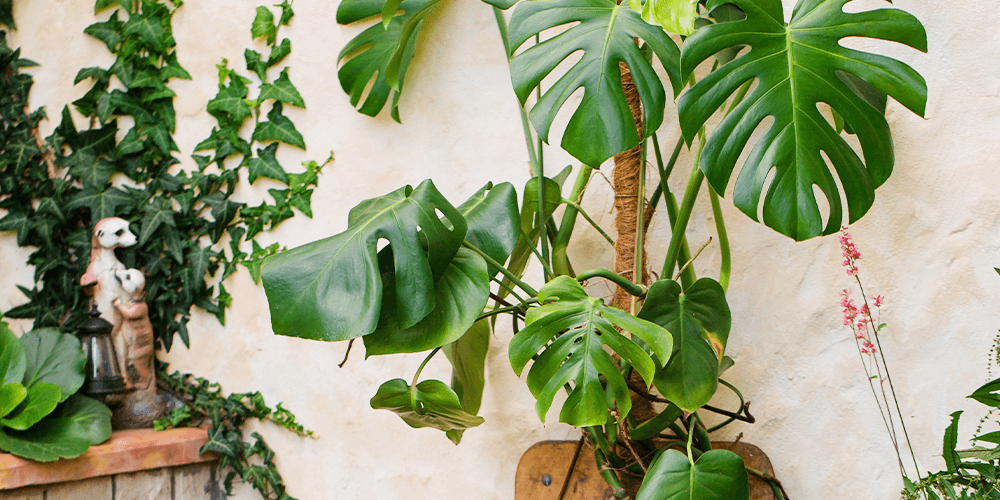
Tropical houseplants that can grow indoors and outdoors are perfect for brightening up our indoor spaces during the winter months, but when the weather warms up, they’ll love some time outdoors to enjoy the sunshine and fresh air! Plus, adding tropical houseplants to your outdoor patio seating area will brighten up your outdoor living space.
However, if you move tropical houseplants from indoors to outdoors too quickly or when the weather isn’t ideal, you can end up with some unhappy plants! Tropical plants definitely benefit from the summer air, but only if you carefully transition them to the outdoors. In this guide, you can learn to make the indoor to outdoor transition as smooth as possible so your tropicals can enjoy the patio season without any damage.
 When Can I Put My Tropical Houseplants Outdoors?
Temperatures in May are usually stable during the day, so it doesn’t hurt to begin the transition in the springtime, but most tropical houseplants can’t cope with temperatures of 10°C or lower, so it’s essential to wait for warm weather to put them outdoors. With summer around the corner, hanging baskets might be the best way to brighten your landscape, deck or dock with beautiful colours to relax and enjoy the outdoors until you can move your tropicals out into the sun.
Typically, June is ideal for a complete transition to the outdoors for your plants. Always read the plant label to determine if your houseplants thrive in full sun or shade during the summer months.
If there is a chance of rain, ensure your houseplants are in containers with drainage holes; otherwise, move them under a covered area. If their pot fills up with water and doesn’t dry out, bacteria can grow and kill your houseplants, or your plant’s roots will rot.
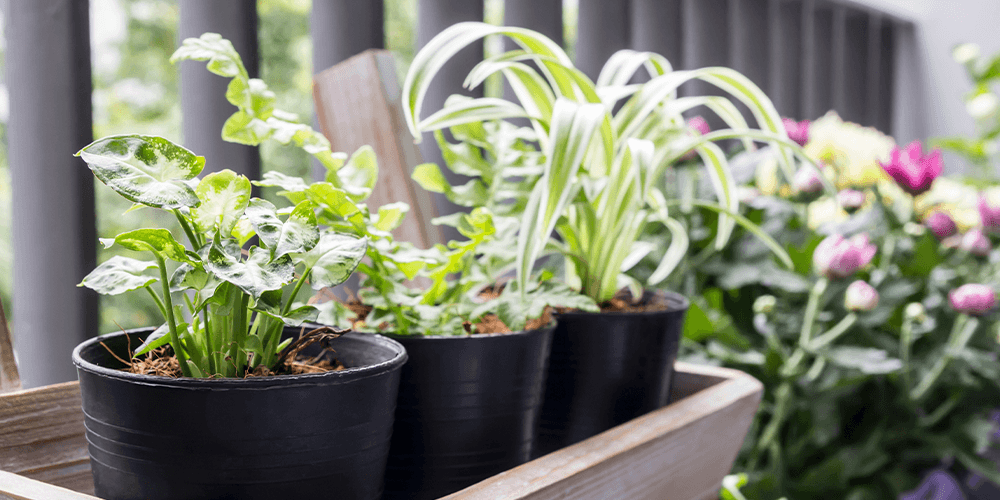 Gradually Increase Outdoor Time Each Day
Moving your tropical houseplants from the regulated environment of your home to the unpredictable environment of your backyard increases plant stress! Just like humans, stress can lead to disease and harm their health. To ease the transition, you can put them outside your backyard for a couple of hours the first few days to slowly introduce them to the fresh air and, more importantly, avoid stressing them out.
Then, you can increase the number of time spent outside gradually. We recommend bringing your plants inside overnight, especially on cold evenings, as tropical houseplants need heat and light to thrive. Using an artificial light overnight and a humidifier can meet the plant’s needs for the time it spends indoors.
It’s important to note that bringing houseplants in and out of the house can introduce pests to your indoor plants. We recommend distancing your tropicals from your other houseplants if they’ve recently been outdoors. You can also spray the foliage with a natural insecticide spray to kill any underlying pests that may be hiding.
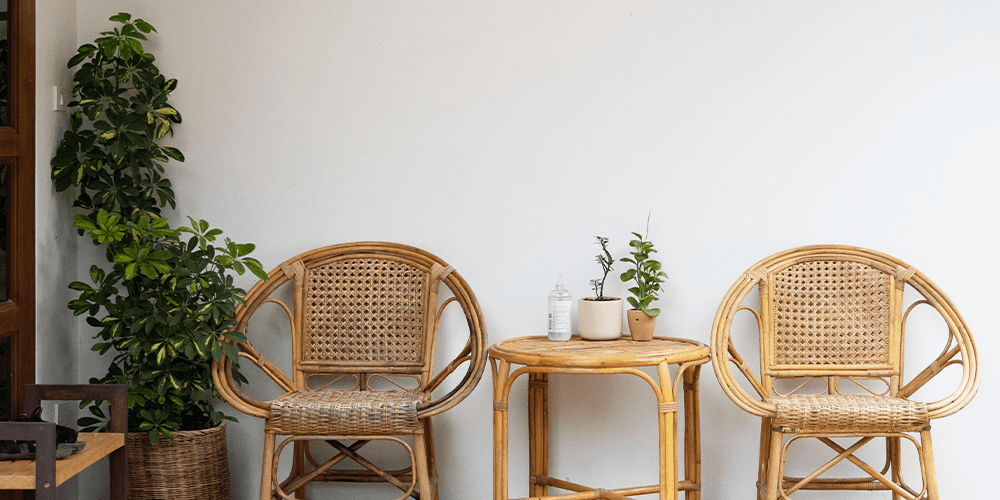 Avoid Direct Sunbeams
Tropical houseplants don’t like the direct sun as it can damage their leaves, leading to brown and crispy ends! Although tropicals can’t tolerate hours of direct sun, they still require indirect sunlight, as sunlight is necessary to keep your houseplants happy. However, avoid direct sunbeams that may burn their leaves.
Place your tropical houseplants beside a north-facing wall, behind an overhang, or any place protected from the hot afternoon sun. You can also place your plants in an area that gets relatively shady in the afternoon, so they can still soak up the morning sun.
If these suggestions of tropical houseplants have you itching to buy some for your collection, Bala & Port Carling Garden Centres have a vast selection of indoor and outdoor tropical houseplants for sale! Visit us soon to see our new collection with a wide variety of tropical houseplants near you for summer 2022!